
Auckland's best ant exterminator
Ant Control: Tackling the White-Footed House Ant
Finding bits of ants falling from light fittings? It's more than just a nuisance.
The Unexpected Housekeeping of Ants
What looks like small black dust or debris around your home may actually be the result of white-footed ants doing their housekeeping. These ants treat deceased colony members as toxic waste and deploy specialist "dumper ants" to remove bodies from the nest. The result is small accumulations of black dust and ant fragments — particularly unpleasant when they appear on beds, sofas, or kitchen benches directly below a hidden nest.
Understanding White-Footed Ants
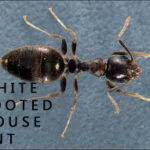
Despite the name, white-footed ants are primarily black. The "white feet" are actually fine white hairs on their legs, only visible under close inspection or certain lighting. Don't let their small size fool you — a mature colony can number anywhere from 8,000 to 3 million individuals, sometimes measuring in kilograms for large nests. They are a resilient species and notoriously difficult to eliminate.
Feeding Habits
White-footed ants feed primarily on plant sap, honeydew, and plant nectar outdoors. They will venture inside homes to raid your jam or honey, and are sometimes found surrounding toilets and sinks in search of water. What makes this species particularly challenging is how they manage food within the colony. Unlike most ant species, foraging workers do not share food directly with the rest of the colony. Instead, sterile workers produce trophic eggs — eggs the queen eats directly. She never gets your bait. This internal food production system is what makes conventional baiting largely ineffective.
Preferred Habitats
White-footed house ants prefer to nest in man-made structures — inside wall voids, roof spaces, and around window frames, and occasionally under houses. They also nest outdoors in retaining walls. Their nests are hidden, often large, and difficult to access without professional equipment. They spread readily through commercial activity such as nursery stock and shipping, which is how they've established themselves so widely across New Zealand.
Threats & Challenges
White-footed house ants pose no stinging threat and don't cause structural damage, but their habit of nesting inside wall voids and around electrical wiring can present a minor fire risk. They are one of Auckland's most persistent nuisance pests, first recorded in New Zealand in 1921 and now well established across Auckland and the wider North Island. Their preference for nesting deep inside man-made structures, combined with their resistance to conventional baiting, makes them one of the harder species to eliminate without professional treatment.
Why Conventional Baiting Fails
Standard DIY baits rarely work on white-footed house ants. Because the queen is fed through the colony's internal trophic egg system rather than through shared foraging food, bait toxins carried in by workers never reach her. The typical result is that only older foraging ants are eliminated — making way for younger, more active colony members to replace them. All your baiting efforts do is prime the nest, making it stronger.
How ACES Treats White-Footed House Ants
At ACES, we work with the biology of this species rather than against it. We use advanced non-repellent transfer products sourced from leading research companies in the USA and Germany. These treatments spread through direct contact between nestmates, penetrating deep into the colony and reaching the queens — stopping the infestation at the source and ending the ant dumping for good. Every treatment is backed by our Silver Bullet Guarantee.
Tired of unwanted ant guests? Contact ACES today and let us sort it — for good.